
Pipeline
Potential first-in-class & best-in-class for Obesity, Cardiometabolic Disorders and CKD
MW-601: Brain-penetrant inhibitor of PTP1B — the enzyme that blocks leptin and insulin signaling in the hypothalamus. Hypothalamic resensitization.
PTP1B is a negative-feedback regulator of leptin and insulin signaling. In obesity it is overexpressed in hypothalamus, creating a leaky-bucket effect where the brain cannot “hear” the satiety signals being sent by the body.
Potentially best-in-class in oral obesity therapy Demonstrated significant differentiation from current GLP-1/GIP therapies through unique PK profile and superior efficacy, safety, and tolerability in preclinical models.
HYPOTHALAMIC RE-SENSITIZATION: By crossing the blood-brain barrier, MW-601 restores POMC neuron activation (suppresses appetite) and inhibits AgRP/NPY (reduces hunger drive).
LEPTIN SIGNALING: PTP1B bind to and dephosphorylates JAK2 at the leptin receptor, terminating the satiety signal. Inhibition restores STAT3 activation and POMC expression.
INSULIN SIGNALING: PTP1B dephosphorylates insulin receptor and IRS-1, blocking glucose-sensing and brain’s ability to sense energy abundance. Inhibition restores PI3K/Akt signaling & insulin sensitivity.
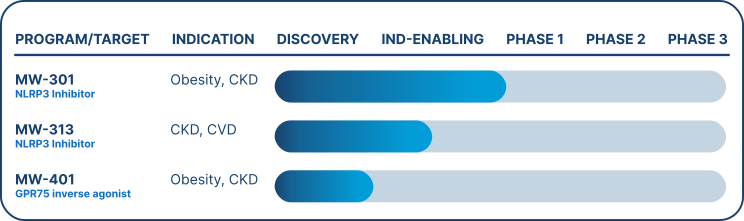
MW-504: NLRP3 inhibitor for treating obesity-driven metabolic and renal inflammation
MW-504 is a highly potent, selective, and orally bioavailable small-molecule inhibitor of the NLRP3 inflammasome. NLRP3 plays a central role in the innate immune response, mediating activation of caspase-1 and subsequent release of pro-inflammatory cytokines IL-1β and IL-18. Chronic NLRP3 activation contributes to metabolic inflammation, insulin resistance, hepatic steatosis, and other obesity-associated pathologies.
Mechanistic Rationale
NLRP3 inhibition blocks inflammasome assembly and activation, preventing caspase-1–mediated IL-1β and IL-18 release. This results in reduced adipose tissue inflammation, improved insulin sensitivity, and decreased hepatic fat accumulation — ultimately improving glucose tolerance and metabolic health.
Therapeutic Potential
MW-504 represents a promising next-generation NLRP3 inhibitor with robust potency, oral bioavailability, and an excellent safety and pharmacokinetic profile. By targeting NLRP3-driven metabolic inflammation, MW-504 has the potential to deliver therapeutic benefit in obesity and obesity-associated chronic kidney disease (CKD), improving insulin sensitivity, metabolic balance, and renal outcomes in patients with inflammation-driven metabolic dysfunction.
MW-313: Systemic NLRP3 inhibitor for chronic kidney disease (CKD)
MW-313 is a potent, selective, and systemically available oral NLRP3 inhibitor developed for the treatment of chronic kidney disease (CKD) and related renal inflammatory disorders. NLRP3 inflammasome activation plays a key role in mediating renal inflammation and damage, contributing to the progression of glomerulonephritis and CKD through increased cytokine production and tissue injury.
Mechanistic Rationale
NLRP3 inhibition suppresses inflammasome activation, preventing caspase-1–mediated release of IL-1β and IL-18, which are major drivers of renal inflammation and fibrosis. By reducing inflammatory and fibrotic signaling, MW-313 aims to preserve kidney structure and function and slow disease progression in CKD patients.
Therapeutic Potential
MW-313 is a next-generation NLRP3 inhibitor engineered for systemic delivery that effectively targets vascular inflammation and metabolic dysfunction driving cardiovascular disease, while also addressing chronic renal inflammation and metabolic dysfunction associated with CKD. Its high potency, oral bioavailability, strong pharmacokinetic performance, and demonstrated cardioprotective activity in preclinical studies establish MW-313 as the best-in-class therapeutic candidate for combating inflammatory cardiometabolic disorders and inflammatory kidney diseases.
MW-401: Best-in-class selective GPR75 antagonist for obesity and metabolic disorders
MW-401 is a highly potent and selective oral antagonist of GPR75, a G-protein-coupled receptor genetically linked to body weight regulation and metabolic health. Human genomic data show that individuals with lower GPR75 expression have significantly lower BMI and improved metabolic profiles, making GPR75 a validated target for obesity and related disorders.
Mechanistic Rationale
GPR75 is primarily expressed in the brain, including the hypothalamus, where it regulates energy expenditure and food intake through signaling pathways parallel to the leptin–melanocortin axis. Antagonizing GPR75 is expected to enhance energy expenditure and metabolic efficiency without directly suppressing appetite or muscle mass, offering a differentiated approach to weight management.
Therapeutic Potential
MW-401 represents a best-in-class GPR75 antagonist with strong translational potential for the treatment of obesity and associated metabolic disorders. Its differentiated mechanism — promoting metabolic rebalancing without appetite suppression — positions MW-401 as a promising candidate for long-term obesity therapy, either as monotherapy or in combination with other metabolic agents such as GLP-1 receptor agonists.